Jason I J Smith

Place, Growth, Investment, Marketing

Jason I J Smith

New report confirms record-breaking Rugby World Cup 2015 economic impact

RWC 2015 was the most economically-successful Rugby World Cup ever, with nearly £2.3 billion generated in economic output according to a report published by EY.

New report confirms record-breaking Rugby World Cup 2015 economic impact
  • Rugby World Cup 2015 set new attendance, viewership and competition records
  • £2.3 billion economic output generated, £1.1 billion directly added to the UK GDP
  • 406,000 international visitors stayed an average of 14 days each in the UK, providing tourism and economic benefits to the host nation
  • Strong regional impact at the heart of nationwide benefits

Rugby World Cup 2015 was the most economically-successful Rugby World Cup ever, with nearly £2.3 billion generated in economic output according to The economic impact of Rugby World Cup 2015 report published by EY.

The 48-day global celebration of rugby, hosted in England and Cardiff between 18 September and 31 October, 2015, was heralded as the biggest and best to date, breaking records in every major metric on and off the field as the compelling action reached, engaged and inspired new fans.

England 2015 was the most competitive, best attended, most viewed, most socially engaged and most commercially successful of the eight tournaments to date and the biggest sporting event of 2015, reinforcing the tournament as one of the world’s most prestigious sports events.

The new report outlines how Rugby World Cup 2015 generated £2.3 billion in output, added £1.1 billion to the UK GDP, attracted 406,000 international visitors from 151 nations and supported 34,000 jobs or volunteer roles the length and breadth of the host nation.

With 2.47 million ticket sales, RWC 2015 was the fifth largest single-sport event ever held. In addition, 98 per cent of available tickets were sold and there were packed crowds at all of the host cities, regardless of stadium size or fixture. As well as huge attendances in the traditional rugby heartlands of the Midlands and south of England, six matches were held in the north of England (Newcastle, Leeds and Manchester), where 291,000 tickets were sold.

  • 44-day global shop window for the UK and rugby
  • 80 per cent of international visitors said they would return to the UK
  • 80 per cent of fans said they had an exceptional experience
  • £2,400 average spend in the UK per international visitor
  • 34,000 jobs created or supported
  • £1 million raised for Tackle Hunger (UN World Food Programme, official humanitarian partner of World Rugby)
  • £958 million spent in UK by international visitors
  • £2.7 billion attributed to inward UK investment directly related to RWC 2015
  • UK retail sales (Office of National Statistics): 1.8 per cent (September 2014 / September 2015) again in part attributed to increased leisure spending around RWC 2015

DOWNLOAD THE REPORT HERE >>

World Rugby Chairman Bernard Lapasset said: “Rugby World Cup 2015 was a very special and record-breaking global celebration of rugby and its character-building values and widely regarded as the biggest and best Rugby World Cup to date.

Incoming World Rugby Chairman Bill Beaumont added: “This new report reflects Rugby World Cup’s status as one of the best-loved and most prestigious major sports events, while highlighting the significant social and economic benefits that make the tournament such an attractive low-investment, high-return hosting proposition for governments and unions alike.”

RFU CEO Ian Ritchie commented: “We wanted Rugby World Cup 2015 to be a celebration of rugby, which inspired the country, and the world, to play and support the game. The team at England Rugby 2015 and the RFU are proud of the tournament we organised and hosted, which will deliver valuable financial benefits not just for the game of rugby, but for the wider national economy.”

INTERNATIONAL VISITORS BRING SIGNIFICANT BENEFITS TO HOST CITIES

International tourists travelled far and wide across England and Wales, bringing significant benefits to the host cities and beyond. On average, the 406,000 international visitors for RWC 2015 each stayed for 14 days in the UK, spending a total of £958 million, at an average of £2,400 per person. This breaks down to £270 million on accommodation, £233 million on leisure activities, £188 million on food and drink, £156 million on travel and £111 million on retail.

EY Executive Director Mike Grice said: “EY is proud to be the official business advisor of Rugby World Cup 2015, and our report demonstrates the truly national impact of RWC 2015. There were a large number of international visitors to host cities outside London, including Birmingham, Brighton and Manchester. Many visitors extended their stays over several days or even weeks, to watch several matches in a variety of different venues. Host cities also gained exposure to international markets, raised their international profiles and encouraged future tourism.”

The 15 fanzones around the country were also a big hit with both international and domestic fans. They not only created an incredible atmosphere, but provided a key focal point for the tournament in each city. More than one million people attended a fanzone, including 265,000 international visitors, who spent an average of £40 in the fanzones contributing a total of £10 million to local economies.

THE REGIONAL IMPACT OF RWC 2015

RWC 2015 generated a total of £980 million for the local economies of the 11 host cities, London, unsurprisingly, leading the way. As home to Twickenham, which hosted 10 RWC matches, including the final, Richmond benefitted from the largest impact of all the London boroughs, with fans coming to games and spending money in the fanzones. There was a total output of £284.1 million in Richmond, which generated a £136 million contribution to the local economy and supported 2,500 jobs.

RWC 2015 also had a big impact on the smaller host cities around the country. For example, in Gloucester and Exeter total output reached £24 million and £14 million, generating a contribution of £12 million and £7 million to the local economies and supporting 400 and 200 jobs, respectively

Sneak preview of #Gloucester’s new FREE “Classical Music For All” event 14th-21st July 2016

Gloucester Classical Music Festival 2016
Classical Music for All
A totally free music festival 
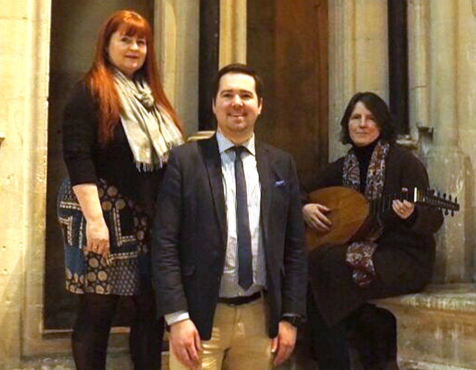
Musical Director – Sebastian Field
Supported by – Marketing Gloucester Ltdsevern-muses-roses1-9311a4
All lunchtime recitals will be at St John’s Northgate
July
Thursday 14th July
Lunchtime recital 12.30pm at St John’s Northgate
Friday 15th July
Lunchtime recital 12.30pm – visit to church from civic trust members – historical angle – recital by Seb and Vicki with historic narrative – at St John’s Northgate
Then [Robot exhibition preview 6-8pm Museum of Gloucester (City Museum in old money)]
then
8pm Choral concert, St Mary de Crypt, Glories of Tudor England
Start outside at 8pm, move inside
Saturday 16th July
11am St Mary de Crypt – Young musicians of Gloucester series
(GLoucestershire Symphony Orchestra?) tbc
Sunday 17/7
Shakespeare – King’s Square – 12 noon tbc
afternoon of community choirs at 2pm, 3pm, 4pm and 5pm St John’s Northgate
(Cantata rehearsal 12-1 St John’s Northgate)
3pm Gloucester Christian Choir
(SNYC, Ecclesiastical Insurance Staff choir, Christian choir, Kingsway and Quedgeley Community Choir etc)
Open up the hall and have tea/coffee/cakes available for sale in aid of the church
Bach cantatas 7.45pm St John Northgate Church
Monday 18/7 is Deryck Webb recital 12.30pm – at St John’s Northgate
Concert 7pm – title tbc-  venue St John’s Northgate
Compline 9pm – venue St John’s Northgate
Tuesday 19/7
12.30pm lunchtime recital – St John’s Northgate
Thursday 21st – Lunchtime recital – 12.30pm St John’s Northgate
Shakespeare at venue New Inn? tbc
End of festival

Pop-Up Events contribute £2.3 billion to the UK economy

Why Are Pop-Up Events So Popular in Britain?


Pop-up shops and stalls are being utilised in a variety of shapes, sizes and locations throughout the UK. They can be found in a traditional shop, shops within shops, as standalone kiosks and even as motorised vehicles – following the example from the food truck craze.

Sales and event marketing firm NBE Marketing attribute their popularity to a rise in the number of visitors to pop-up shops, and an increased average spend by customers. According to the British mobile operator EE, pop-up retail now contributes a massive £2.3 billion to the UK economy (The Event Structure, 2016). The British telecoms subsidiary also reported that pop-up retail is increasing at a much faster rate than initially forecasted, and the sector is now growing at a rate of 12.3%, compared to 8.4% back in 2014. The research carried out by EE found that 44% of respondents had visited a pop-up within the past year, and were spending £8 more a month than they were back in 2014 (The Event Structure, 2016).

One of the fundamental reasons why pop-up stores are becoming increasingly favourable is the flexibility they provide to their employers. The flexible nature of the stores means that they can often be executed anywhere where their target market exists, giving customers the opportunity to shop when and where they want, which  is fantastic for increasing competitiveness and generating higher profits. The stores also have that ‘fear of missing out’ quality to them, which is suggested attracts customers through perceived exclusivity.

The experimental possibilities of employing pop-up solutions are lucrative, with financial commitments significantly lesser than that of traditional stores. It is argued that the risks involved are minimal, making them perfect for testing. Over the last couple of years many online retailers have tested the water by offering a pop-up experience to customers, as it gives them a chance to see if there is a strong enough market for them to invest further in a concrete location.

In order to engage a target audience, there needs to be a good understanding of them. The firm argues that it’s imperative to build and shape pop-up campaigns around the audience, rather than around the brand. It’s important to understand who the target audience is, what they value, where they are located and the type of experience they’re likely to engage with. At the end of the day, the firm believes that the key to success is all about meeting customers’ needs, and that’s exactly what can be achieved through pop-up retail.

Source: http://www.theeventsstructure.com/news/rise-pop-retail
###

Contemporary Architecture in Historic Urban Environments

Jason I J Smith's avatarJason I J Smith

Conservation image

A critical issue facing decision makers and conservation professionals is accommodating change to heritage places and adding new layers to the historic urban environment in ways that recognize, interpret, and sustain their heritage values. Over the last decade, a vigorous debate has ensued regarding the appropriateness of contemporary architectural insertions into historic urban areas. This debate has polarized sectors of the architectural community, pitting conservationists against planners and developers. It has positioned conservationists as antidevelopment and antiprogress, responsible for stifling the creativity of a new generation of architects and their right to contemporary architectural expression.

Change, however, is inevitable. Buildings, streetscapes, and urban…

View original post 1,746 more words

Gloucester wins national Best Bar None award  


Gloucester’s commitment to keeping the city centre’s nightlife safe has resulted in the city being a named as a winner in the national Best Bar None awards.

On the 2nd February 2016 Gloucester won the award for ‘Best New Scheme’ in the national Best Bar None awards.

Pubs, bars and clubs in Gloucester competed with cities across the country to receive national recognition for its commitment to improving the city’s nightlife experience.

Gloucester accredited 15 new premises in its first year of its commitment to improving the city’s night life. As a result of this commitment and the hard work of the NightSafe groups, the city was short listed as a finalist in the ‘Best New Scheme’ category.

The Best Bar None award is a nationally recognised award scheme which aims to reduce alcohol related crime and disorder, help licensed traders to build relationships between themselves, the police and local authorities, and to recognise good practice.

Jennie Dallimore, cabinet member for Communities and Neighbourhoods, said: “We are delighted that Gloucester has been chosen as the winner in the “Best New Scheme” category.

“Both the assessors and the fifteen premises that signed up worked incredibly hard to get set up quickly and achieve such high standards. It highlights the commitment to working together to make Gloucester a safer City.

“Winning this award is great, but the real prize is the outcomes of the Best Bar None initiative. I hope that next year we will attract even more venues to take part. ”

Steve Wood, local community Inspector, said: “Best Bar None is a great national initiative to raise the standards for our night-time economy.

“Gloucester was keen to take part and we are thrilled to be chosen as winners of the “Best New Scheme” award. We are committed to ensuring safer days and nights for all, through our partnership working in the City”

Summary of Chancellor’s long-awaited Spending Review

UK’s Economic & Fiscal Performance

The Chancellor reiterated the growth of the UK economy and the falling deficit, pointing to the following statistics:


  • The Office for Budget Responsibility says that since 2010, no advanced economy has grown faster than the UK.
  • Growth forecasts are 2.4% for this year, 2.4% for next year and 2.5% for 2017.
  • UK deficit will fall this year and will keep falling until 2019/2020 where a surplus is estimated.
  • The North has grown quicker than the South and jobs growth in the Midlands been quickest of all regions.
  • Productivity is growing slowly but still lags behind other advanced economies.


Key Announcements

In addition to the overview of the UK’s economic and fiscal performance, the Chancellor also made the following announcements:


  • Announcements on the business rates review have been delayed until the 2016 Budget.
  • Rate relief for small businesses has been extended for another year.
  • Confirmation of the localisation of business rates, first announced at the Conservative Party Conference.
  • 30% additional reduction to local government budgets.
  • Tax credit reductions will be scrapped but £12 billion of welfare savings will still be delivered in full.
  • Devolution of corporation tax to Northern Ireland likely to go ahead following agreement between different parties in Stormont.
  • No cuts to police budgets and 30% more spending for counter-terrorism.
  • £12 billion more spending on capital investment.
  • Sustained funding for some cultural amenities with galleries and museums benefiting but the Department for Culture Media and Sport suffering a cut of 20%.
  • £6.9 billion investment to build 400,000 affordable homes by the end of this parliament.
  • 37% cut to the budget of Department for Transport
  • 24% cut to HM Treasury
  • 17% cut to the budget of the Department for Business, Innovation and Skills.

10 Tips to Improve Your TripAdvisor ranking

As we all know (or should know), travelers rely on reviews when they’re planning trips, and TripAdvisor is the biggest review platform in travel. According to TripAdvisor, 83% of all travelers claim that TripAdvisor reviews make them more confident in their travel decisions.

Here are 10 simple steps that you can take to ensure that your company ranks well on TripAdvisor:

  1. Claim your listing

    Make sure you are registered as the owner of your listing. You wouldn’t leave the doors to your company unlocked would you? Don’t let your listing go unclaimed or worse yet, claimed by a competitor.

  2. Confirm your company’s details

    Double check that your company’s name, address, phone number are correct and up-to-date. Make sure that your company is listed under the appropriate category. Are you an attraction, activity, sports tour, adventure tour, sightseeing tour or rental business? TripAdvisor has massively improved the categorization of “Things to do”: if you have an old profile, make sure you are taking advantage of the new detailed categories.

  3. Write a great description

    As often happens, your company’s description might have been originally uploaded by a traveler. Invest some time into writing a short, rich description of what you offer to help you stand out from your competition. It is often helpful to include additional information like opening times, seasonal activities or age restrictions.

  4. Upload photos and videos

    You only get one chance to make a first impression. Make sure you make a good one by uploading your best photos and videos to your listing. Great images and videos give travelers an idea of what to expect when they come on a trip with you, and early expectation management is an easy way to make sure you get great reviews after the trip.

    The more high-quality photos on your listing, the easier it will be to engage people. TripAdvisor reports that listings with 30 or more photos get 41% more traveler engagement than listings with less than 10.

    jetski

  5. Get on the map

    Make sure that your company is listed in the correct location on the map. This helps travelers find you quickly and ensures that you appear correctly under the “Near me now” search function on mobile devices. If your company is not located on the map, or is displayed in the wrong location, you can update it from your Management Center.

  6. Display your reviews on your website

    A great way to increase your bookings is to openly display your customer reviews on your website. Showing your reviews inspires trust in travelers and lets them know that you’re a quality, professional company standing behind the tours and activities you offer. TripAdvisor offers a multitude of tools to do this, but the best way to display your TripAdvisor reviews is to connect your profile directly with your TrekkSoft Account.

  7. Send post trip emails

    Make sure you send a post trip email to all of your guests thanking them for joining you on a trip, telling them that their feedback is important, and asking them to please review your company on TripAdvisor.

    TrekkSoft makes it easy for you to automate this process using the post trip email feature. Once activated, TrekkSoft will automatically send an email to each passenger after their trip. The default text for post trip emails is the text recommended by TripAdvisor. You have the ability to edit and customize this email to best suit your company’s needs.

    Tip: Ask your guests to contact you directly if they had any problems or were not satisfied with their experience. This will allow you to turn a potential negative review into a positive one.

  8. Involve your staff and guides

    For most companies, more guests = more trips = more work for the guides. Make sure your team of guides understands that customer reviews have a direct impact on the amount of work they get. Train your guides to mention to customers that they would appreciate feedback in the form of reviews on TripAdvisor. Make sure to discuss reviews as a team, acknowledge good reviews, and use negative reviews as a tool for improvement.

    guides_2

  9. Respond and engage with every review

    Make sure you or someone in your company is responsible for responding to every review as quickly as possible. Management responses are a great opportunity to continue a conversation with past guests and ensure their loyalty to your company. Responding to reviews shows prospective travelers that you care about your guests, and it will have a direct impact on increasing your bookings.

    TripAdvisor offers some pretty good guidelines for composing your responses, but in general you should: keep it professional and polite, address the issues, correct any misstatements, and don’t be defensive or aggressive.

    If you feel that a review is fake, violates TripAdvisors review policy or if you are being blackmailed by a guest, report it to TripAdvisor immediately. Their team will review your case, and if it is valid, remove the review in question. TripAdvisor takes blackmail reviews very seriously, and does their best to protect companies from being extorted by guests.

  10. Don’t take shortcuts

    Like all things in social media and user generated content, your TripAdvisor listing is something that needs to be managed, nurtured, and grown over time. A well managed listing needs constant attention. Strive to continually increase your reviews over time, and always make sure that your most recent 10 reviews have management responses.

    Posting fake reviews, rewarding your guests for positive reviews, using organized boosting techniques, or posting fake reviews on your competitors sites are all actions that will jeopardize your listing on TripAdvisor.

    Being banned from TripAdvisor is right up there with having your website blacklisted by Google. Beyond the risk, most travelers are adept at spotting frauds or content that is not genuine. If travelers get the impression you are cheating on TripAdvisor, it is going to hurt your reputation and do more damage than good.

2012 – 2014 overall number of overseas visitors to Gloucester increased by 66.6%. Visitor spend over this same period increased by 17.2%.

The information below comes from the International Passenger Survey (IPS). The IPS is a continuous survey carried out by the Office for National Statistics (ONS).  It covers all major air, sea and tunnel ports, providing detailed information on the numbers and types of visits made by people travelling to and from the UK.

B60XB6

Below three tables showing the number of overseas visits to Gloucester, Gloucestershire and the UK, and how much they spent, in the three years from 2012 to 2014. Unfortunately, the sample size from the IPS data at a city level is too small to break down by visit purpose. The figures for the city of Gloucester (Table 1) include visitors travelling for the purpose of study, visiting friends and relatives, business, holiday and other. There is also an unexpected spike in visitor spend in Gloucester in 2013. For this reason we have included the figures from 2012. However, information at a county, regional and UK basis can be reliably used and so the information provided for Gloucestershire (Table 2) and the UK (Table 3) is of overseas visitors travelling to the UK on holiday.

For more information on regional and county statistics on inbound tourism please visit our website: http://www.visitbritain.org/nation-region-county-data

  1. Total inbound visits to Gloucester
Year Visits Spend (Million)
2014 70,000 £17
2013 57,000 £47
2012 42,000 £14.5

Between 2012 and 2014 the overall number of overseas visitors to Gloucester increased by 66.6%. Visitor spend over this same period increased by 17.2%.

  1. Total inbound holiday visits to Gloucestershire
Year Visits Spend (Million)
2014 118,147 £41.86
2013 95,932 £38.34
2012 68,795 £30.05

Between 2012 and 2014 the number of overseas visitors on holiday to Gloucestershire increased by 72%. Holiday visitor spend over this same period increased by 36.4%.

  1. Total inbound holiday visits to UK
Year Visits (Million) Spend (Billion)
2014 13.58 £8.65
2013 12.66 £8.44
2012 11.96 £7.46

Between 2012 and 2014 the number of overseas visitors on holiday to UK increased by 13.5%. Holiday visitor spend over this same period increased by 16%.

A chance for #Gloucester! Ideas for a new vernacular architecture.

Developing a new vernacular for the city of Gloucester

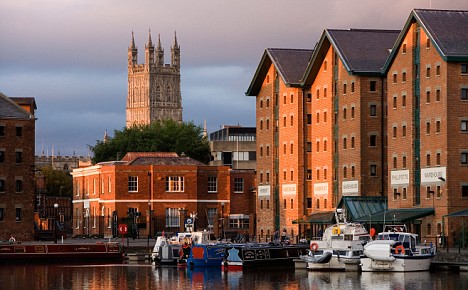
For those involved in the regeneration of the Cathedral city of Gloucester there are few, if any who would deny that the city is “on the up”. Economic indicators show that this is a city that is growing at a region beating pace. As a city, Gloucester finally seems to have its ducks in a row regarding the pieces of regeneration that need to be undertaken to complete the incredible transformation that we can see significantly completed at the Quays and Docks. Money has been committed to the development of Blackfriars Quarter, Barbican and Quayside with a start date scheduled for the first ground clearance and the former Prison is ready to be developed. Money has been committed, assets purchased and architects appointed for the bus station in Kings Quarter. Development of an iconic multi-use venue located at Southgate moorings has been muted and if realised would fill the much maligned “missing link” between Gate streets and the redeveloped Quays.

GlooucesterCathedral

All of these are exciting projects behind which there is a head of steam, but maybe now – before we start sending in the excavators – is the time that we should pause and examine exactly what we want to see at these locations and what the city needs in order to fulfil the needs and aspirations of the current population and to overcome the barriers to growth for Gloucester becoming a “complete” city.

Although there can be much debate as to what type of development should be where – residential, hotels, leisure, cultural facilities and so-on the purpose of this article is not to consider the type of development but to discuss whether before we run headlong at our new regeneration projects we should not first try and establish how we want these to look.

Gloucester has been presented with a once in a life time opportunity to define the look and feel of the city. The major redevelopments will be positioned at points in the city where they will make a statement. The question we must ask ourselves is what do we want that statement to be?

My view is that it is now that we should be looking to develop guidelines for a new vernacular architecture for Gloucester – and one that directly speaks to the heart of the residents of the city and will continue to build on what makes this city unique. For too long major developments have been imposed on the city in a watered down homogenous form that at best pays lip service to place.

In developing this new vernacular architecture we need to answer two questions – what are we hoping to achieve by this and what will be its influences and points of reference.

By developing a new vernacular, planners, influencers and visionaries in Gloucester have a chance to help define what Gloucester is both to its citizens and to the wider world. By promoting this new vernacular in iconic keystone developments there is an opportunity to develop the sense of place and civic pride that is needed by every thriving city which aims to grow.

So what should the new vernacular reference? In many cities and towns this might seem a difficult question and possibly even in Gloucester where over the 2000 years of history there have been a wide range of architectural influences and materials. These include buildings constructed from the remains of the Roman and later Anglo-Saxon fortifications, fine timber framed buildings such as The New Inn and 26 Westgate, Regency, and red brick within the industrial dock areas and Victorian and Edwardian suburbs.

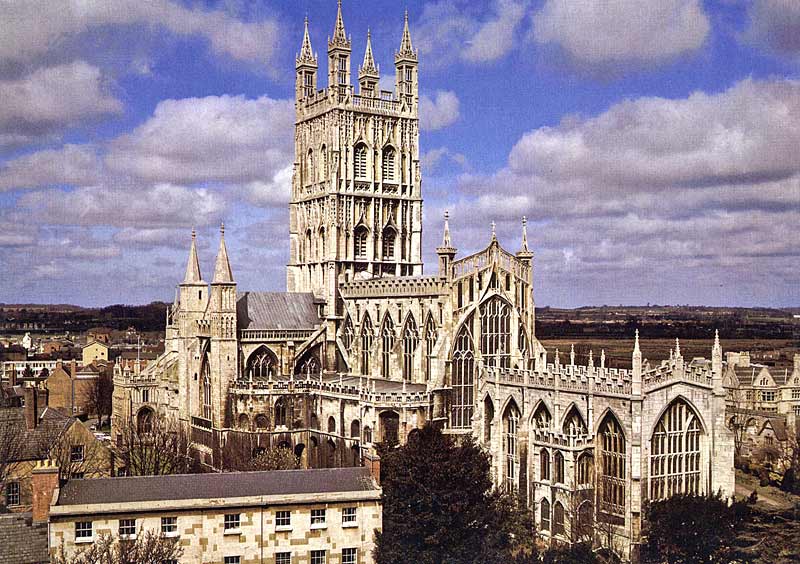
Yet alongside of all of these – none of which is peculiarly home grown – in Gloucester there is a piece of architecture that already is defined by and defines the city. This piece of architecture was created by local craftsmen using local materials and using locally developed new forms and techniques which were years ahead of their contemporaries. It is a building that has influenced many other significant buildings in the city’s history and worldwide. This building is the beautiful, iconic Abbey of St Peters otherwise known as Gloucester Cathedral.

This is the building that I believe should be the touchstone for developing the new vernacular for Gloucester. Without being recidivist we should be looking to develop an architectural pallet of materials and design themes that will enable visitors and locals alike to identify the new developments as being uniquely Gloucester. There are three, possibly four influences that I believe any architect seeking to produce civic architecture that truly references Gloucester should refer to. These are as follows.

  • Perpendicular Gothic[1]
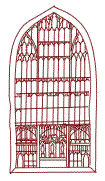
  • Large glass windows subdivided geometrically
  • Limestone
  • Fan Vaulting

perpendicular-window

Imagine developments such as the new bus station, Kings Quarter and a beautiful iconic multi-use cultural center on Southgate moorings which whilst refraining from cliché nevertheless reference and reinterpret the soaring and elegant perpendicular gothic arch, large glass windows divided geometrically and reflecting and empahasising colour and utilised the warm cotswold colours the people of Gloucester identify with the building which defines the city. This is the opportunity.

The politicians and planners of Gloucester have the chance now to demonstrate a genuine vision for the city of Gloucester, one that is not a watered down, pastiched version of internationalist modernism but one born of Gloucester and one that will make the people of Gloucester prouder still of their home city. Any architect involved in this project should try to get under the skin of the identity of the city and its citizens and aim to present architectural that will truly inspire the next generations, following the spirit of those who design the Cathedral and aiming to design something that is not just of 2015 but buildings that will not date but will  have a timeless quality and still have relevance in 100 or 200 years.


[1] http://www.britainexpress.com/architecture/perpendicular.htm

Contemporary Architecture in Historic Urban Environments

Conservation image

A critical issue facing decision makers and conservation professionals is accommodating change to heritage places and adding new layers to the historic urban environment in ways that recognize, interpret, and sustain their heritage values. Over the last decade, a vigorous debate has ensued regarding the appropriateness of contemporary architectural insertions into historic urban areas. This debate has polarized sectors of the architectural community, pitting conservationists against planners and developers. It has positioned conservationists as antidevelopment and antiprogress, responsible for stifling the creativity of a new generation of architects and their right to contemporary architectural expression.

Change, however, is inevitable. Buildings, streetscapes, and urban areas evolve and change according to the needs of their inhabitants. Therefore, it is important to determine the role of contemporary architecture in contributing to this change in ways that conserve and celebrate the special character and quality of the historic environment that communities have recognized as important and wish to conserve for future generations.

Historic areas typically exhibit a range of heritage values, such as social, historical, and architectural. Frequently, they also have aesthetic significance; therefore, the design quality of new insertions in a historic area is important. One of the challenges in this debate on the role of contemporary architecture in historic contexts is that design quality can be seen as subjective. Assessing the impact of new development in a historic context has also been accused of being subjective. However, increasing development pressure has pushed governments and the conservation community to provide more objective guidance to secure what is termed “the three Cs,” namely:

  • certainty in the planning system about what constitutes appropriate development;
  • consistency in government decision making; and
  • communication and consultation between government decision makers and the development sector on creating successful outcomes.

Design professionals differentiate between taste and design quality. Taste is subjective, while quality is measurable. Prescriptive planning tools such as height restrictions, envelope limitations, and requirements to use certain materials all attempt to provide qualitative design measures. In many places, it is only when a historic building or area is involved that issues of design quality and character are included in the planning process through development or impact assessment. Clearly there is a need to provide guidance or establish well-understood standards to assess new development occurring within treasured streetscapes, neighborhoods, or historic landscapes, in order to meet the three Cs. Given that the debate is now occurring at a global scale, such standards need to achieve some level of consensus at an international level.

STARCHITECTURE IN THE HISTORIC CITY

Conservation image

The recent phenomenon of celebrity architecture—those landmark buildings described by Charles Jencks as “enigmatic signifiers”—has elevated the new architectural monument to the status of a great artwork and signals the emergence of those who have come to be known as starchitects.¹ City leaders, anxious to secure global status for their city in an increasingly competitive world, have turned to these international celebrity architects to create new iconic landmarks to put their city on the map. For example, Frank Gehry’s brief for the Guggenheim Museum (1993–97) was “to do for Bilbao what the Sydney Opera House did for Sydney.”²

Jencks, in his 2005 book The Iconic Building, contrasts the traditional monument with the celebrity building—which is driven by commercial needs and whose role it is to stimulate interest and investment in cities through its attention-grabbing, provocative design. “In the past,” he writes, “important public buildings, such as the cathedral and the city hall, expressed shared meaning and conveyed it through well-known conventions.”³ Such important public monuments may be museums, as is the case with the Guggenheim in Bilbao, but since the mid-1990s, the monumental approach has been extended to a wider range of private buildings, such as department stores, apartment buildings, and even additions to family homes. The acceptability or fashion for attention-grabbing buildings means that difference is applauded and is celebrated over contextualized design—the approach the preservation community generally advocates. Some of these buildings may be fabulous, but how many monuments does the urban environment need? What will it be like in the future when the buildings are all unrelated, each vying for attention and without the traditional hierarchy of monumentality that enables a reading of the urban landscape as it relates to function? Where does the iconic building fit within the already existing iconic urban fabric of the historic city?

Herein lies the conflict. Starchitecture clamors for attention to consciously create an identity for the aspiring global city. In the case of the historic city, such as those included on the World Heritage List, the city has already been recognized more often than not for its architectural, aesthetic, and historic character. Preservationists would argue that the historic city is already iconic, so new development that seeks to stand apart from it is likely to receive criticism from communities, many of which have worked hard to protect the historic area. Sometimes it is the homogeneity or unity of the architecture that is important; sometimes it is the combination of historic layers and parts that contributes to significance. Perhaps ironically, inevitably it is its local distinctiveness that is being celebrated through the international recognition World Heritage listing brings.

In the early 2000s, a number of World Heritage sites were nominated to the List of World Heritage in Danger, due to proposed, highly contemporary development deemed inappropriate because it potentially threatened the outstanding universal values of the nominated sites. The call by the World Heritage Committee (WHC) for action to address this issue resulted in a 2005 conference in Vienna entitled “World Heritage and Contemporary Architecture—Managing the Historic Urban Landscape.” The outcome of this meeting was the Vienna Memorandum,4 which proposes an integrated approach to the contemporary development of existing cities in a way that does not compromise their heritage significance. Since that time, the WHC has worked with its advisory bodies to address a number of related issues pertaining to the conservation and management of the historic urban landscape.5 Simultaneously, many local governments and heritage institutions have worked to develop guidance to gain a shared understanding of what constitutes appropriate development in the historic environment between owners, developers, and decision making bodies.6

CREATING TOMORROW’S HERITAGE

There are varying views on what constitutes appropriate new development within a historic context. Some argue that new insertions to the fabric of the historic urban environment should be in the style of the old. Historically, traditional settlements and cities like Ait Ben Haddou in Morocco or Zanzibar’s stone town have demonstrated a continuum of building traditions that exemplifies this approach. In the pre-modern era, redevelopment in commercial city centers, such as London’s Regent Street, followed a Beaux Arts approach, with grand town planning and architectural gestures. With the advent of Modernism, large-scale reconstruction, which architecturally broke with traditional architectural and planning forms, changed the face of many cities in the twentieth century. In recent times, in reaction to modern interventions, some architects have chosen to continue to design buildings in a more historical style while nevertheless utilizing modern materials and technologies. Others abhor historicism and argue that each generation should represent its own time. New layers should represent the ideas, technology, materials, and architectural language of each generation. Pastiche is a dirty word.

The historic environment can, in fact, accommodate a rich variety of interpretations and expressions. A vernacular or traditional response may be as valid as a more contemporary response. It is the quality of the relationship between old and new that is critical, not the architectural language per se. Issues such as scale, form, siting, materials, color, and detailing are important to consider when assessing the impact of a new development within a cherished historic town, city, or site. These criteria are examples of those typically considered when assessing the impact of new development in a historic context.7

Most successful new buildings designed in a valued historic context inevitably rely on an understanding of, and then response to, the special character and qualities of the context. As with any conservation work, understanding significance of the place is crucial. Also in common with most conservation work is that it is case specific. A city center with an architecturally unified city core may need a different approach than one that has a variety of architectural forms, scales, and expressions. In an urban settlement that continues to sustain traditional craft and building techniques and materials, it may be extremely important to promote the continuation of these practices.

An important starting point is the premise that the place has been identified by present and past generations to be important enough to warrant protection and be subject to the prevailing laws, regulations, and policies to secure its conservation and to manage change in such a way that its significance is conserved. The responsibility of designers is to ensure that their work contributes to and enriches rather than diminishes the built environment. Conservation principles can often lead to heightened levels of creativity. Many architects, initially frustrated by the seeming interference of the conservation practitioner, in the end will agree that the outcome has been enhanced through a rigorous, well-articulated process.

Conservation is a balance between preserving the special character, quality, and significance of the historic place and facilitating change in a way that sustains it into the future. Inevitably every decision and subsequent action is of its own time. The role of the conservation practitioner is to ensure that today’s decisions do not do irreparable damage. Successful designers recognize that working within the historic context is not a constraint but an opportunity— where the whole can be greater than the sum of the parts, and where a contemporary building can add a rich new layer and play a role in creating the heritage of the future.


1. Charles Jencks, The Iconic Building (New York: Rizzoli, 2005).
2. Jencks, Iconic Building, 12.
3. Jencks, Iconic Building, 7.
4. UNESCO World Heritage Centre, Vienna Memorandum on World Heritage and Contemporary Architecture— Managing the Historic Landscape (Vienna: UNESCO World Heritage Centre, 2005). 5. The World Heritage Center’s Historic Cities Program is engaged in developing a recommendation on the Historic Urban Landscape, including investigating the impact of contemporary architectural additions on historic urban environments. See http://www.whc.unesco.org/en/cities.
6. Examples include the United Kingdom’s Commission for Architecture and the Built Environment (CABE) and English Heritage, Building in Context: New Development in Historic Areas (2001), available online at http://webarchive.nationalarchives.gov.uk/20110118095356/ http://www.cabe.org.uk/publications/building-in-context. See also NSW Heritage Office and Royal Australian Institute of Architects (NSW Chapter), Design in Context: Guidelines for Infill Development in the Historic Environment (Sydney: NSW Heritage Office and RAIA NSW, 2005), available online at http://www.heritage.nsw.gov.au/docs/DesignInContext.pdf.
7. See, for example, NSW Heritage Office and Royal Australian Institute of Architects, Design in Context, which includes these as criteria.