
Introduction
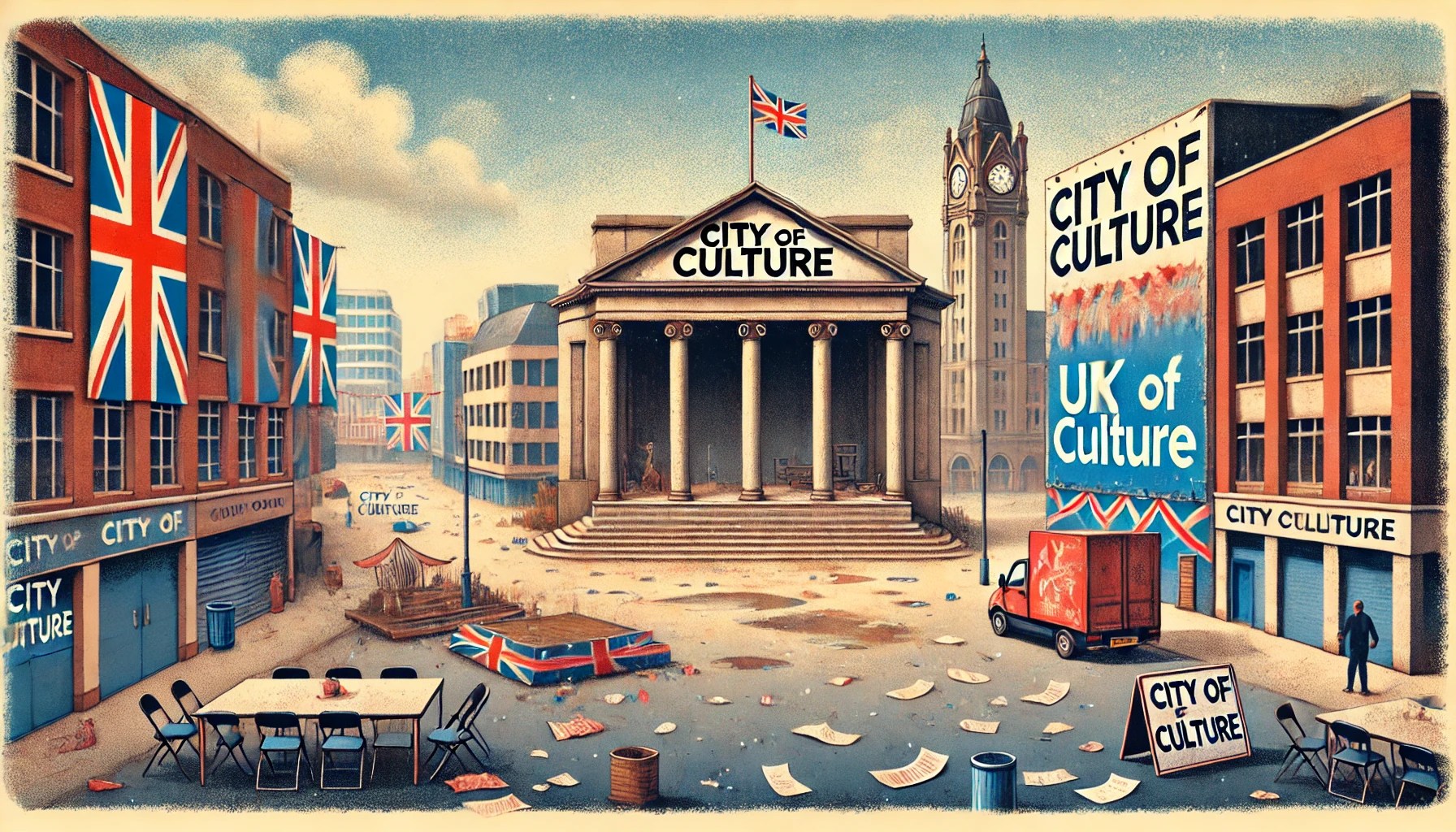
The UK City of Culture initiative, despite its noble intentions, has faced significant criticisms for failing to achieve its promised economic, social, and cultural impacts. Key shortcomings identified include the imposition of external experts, cultural imperialism driven by centralized decision-making, a focus on “quality” over community relevance, and governance structures that lack genuine local representation. Additionally, the initiative has been criticized for its lack of investment in physical cultural infrastructure, which could provide long-term benefits to local communities. This article explores these issues and suggests an alternative model that prioritizes local engagement, empowerment, and sustainable cultural development.
Issues and Shortcomings
The “Parachuting In” of External Experts:
- One of the primary criticisms of the UK City of Culture initiative is the reliance on external “experts” who move from city to city, often bringing with them generic cultural strategies that do not align with the unique contexts of the host cities. These experts, many of whom are temporary consultants or cultural professionals, tend to impose a one-size-fits-all approach that overlooks local needs, aspirations, and talents. The issue lies in the parasitic nature of this model: these experts often extract value from local communities without contributing to the long-term development of local cultural ecosystems.
- A more effective approach would involve genuine support for local groups, organizations, and existing infrastructure. This can be achieved by prioritizing funding for grassroots cultural initiatives and ensuring that local cultural leaders and practitioners play a central role in decision-making processes. For example, establishing a requirement that a significant percentage of cultural programming and funding is led by local organizations would help to build capacity, retain local talent, and ensure the cultural program is genuinely reflective of local identity.
- Cultural Imperialism by Centralized, Middle-Class “Culture Vultures”:
- The current model of the UK City of Culture has been criticized for its top-down approach, where decision-making is often concentrated among a small group of individuals based in London or other metropolitan centers. These decision-makers, who are typically from middle-class backgrounds, may impose cultural values, themes, and agendas that do not resonate with the local population. This approach often marginalizes local voices and overlooks the rich, diverse cultural practices that exist within the community.
- A shift towards a more localized model of cultural development would involve decentralizing the control over cultural programming and funding. Decision-making bodies should be composed primarily of local representatives, including community leaders, local artists, and cultural organizations. Additionally, funding criteria should be restructured to prioritize projects that reflect local cultural traditions, histories, and aspirations, rather than conforming to externally imposed standards of “excellence” or “innovation.”
- Focus on “Quality” Over Community Relevance:
- The emphasis on so-called “quality” cultural programming often reflects a narrow, elitist understanding of culture, which may be disconnected from what local communities value or need. This focus on “quality” is frequently equated with the replication of cultural forms and practices associated with London-centric or metropolitan arts institutions. For instance, programs often prioritize contemporary art forms, such as avant-garde theatre or experimental music, over local cultural expressions that may be more meaningful to residents, such as local history, folk traditions, or community festivals.
- To counter this cultural snobbery, the UK City of Culture initiative should adopt a broader and more inclusive definition of culture that values all forms of cultural expression, including those that are rooted in local traditions and everyday life. This could involve introducing participatory budgeting practices, where local residents are actively involved in deciding which cultural projects receive funding. By giving communities a direct voice in shaping the cultural agenda, the initiative can ensure that programming is aligned with local interests and needs.
- Creation of Governance Bodies That Are Not Truly Local:
- Governance structures for the City of Culture initiative often lack true local representation, instead prioritizing individuals or organizations that meet the requirements of Arts Council England (ACE) or other national bodies. This results in governance bodies that may not have a deep understanding of the local context or a genuine commitment to local development. Additionally, these bodies may prioritize meeting the expectations of national funders over addressing the needs of the local community.
- To address this issue, governance bodies should be reconstituted to reflect the local population genuinely. This could involve mandating that a majority of board members are drawn from local communities and ensuring diverse representation across socioeconomic, cultural, and demographic lines. Furthermore, the governance framework should be designed to be accountable to local communities, with regular public consultations and transparent reporting on decision-making processes and outcomes.
- Overemphasis on Issues Favored by Central Authorities:
- The City of Culture initiative often focuses on issues favored by central authorities, such as youth engagement, race relations, or climate change, which, while important, may not be the primary concerns of local communities. This emphasis can lead to a disconnect between the cultural programming and the issues that local residents care about, such as local history, heritage, or economic development.
- A more community-centered approach would involve conducting comprehensive local needs assessments to understand the specific issues, challenges, and opportunities within each city. Cultural programming should then be tailored to address these locally identified priorities. For example, if a community values its industrial heritage, programming could focus on preserving and celebrating that history through exhibitions, storytelling projects, and educational initiatives.
- Lack of Investment in Physical Cultural Infrastructure:
- One of the most significant shortcomings of the UK City of Culture initiative is its lack of focus on investing in physical cultural infrastructure, such as museums, theatres, and cultural hubs. Arts Council England (ACE) and other funding bodies tend to prioritize funding for temporary events, exhibitions, and performances, which can provide short-term cultural engagement but do little to build lasting cultural capacity or infrastructure within cities.
- Research indicates that investment in physical cultural infrastructure can have significant long-term benefits for local economies. A study by the Royal Society of Arts (2019) found that for every £1 invested in cultural infrastructure, there is a return of approximately £4 in local economic activity due to increased tourism, job creation, and local spending. Furthermore, physical infrastructure provides a lasting resource for local communities, supporting cultural education, engagement, and participation long after the City of Culture designation has ended.
- However, critics argue that investment in infrastructure can be costly and may divert funds away from other cultural initiatives. Some also suggest that infrastructure projects can become “white elephants” if not well-planned or aligned with local needs, potentially leading to underused or abandoned facilities. Nonetheless, these risks can be mitigated by involving local communities in the planning and decision-making processes to ensure that new infrastructure aligns with local aspirations and has a clear, sustainable purpose.
- Failure to Build on Endemic Talent and Organizations:
- The current model often overlooks or underutilizes existing local talent and cultural organizations, opting instead to import external acts or exhibitions that may not resonate with local communities. This not only undermines local cultural ecosystems but also results in a missed opportunity to cultivate and promote homegrown talent.
- A more effective approach would involve mapping and actively supporting local cultural assets, including artists, musicians, writers, and community organizations. Funding and resources should be directed toward initiatives that promote and develop local talent, ensuring that the cultural program is not only representative of the local community but also contributes to the long-term growth of its cultural sector.
- Inadequate Community Engagement and Participation:
- Many City of Culture programs fail to engage local communities meaningfully, resulting in a sense of disconnection or even resentment toward the initiative. This can be exacerbated by the use of inaccessible language, high ticket prices, or the perceived elitism of certain cultural events.
- To foster genuine community engagement, the initiative should prioritize participatory and accessible cultural activities, such as open workshops, street festivals, or community theatre projects. Moreover, efforts should be made to remove barriers to participation, such as by offering free or low-cost entry to events and ensuring that marketing and communication materials are clear, inclusive, and representative of the local community.
Conclusion
The UK City of Culture initiative has the potential to deliver meaningful economic, social, and cultural benefits, but it must address its current shortcomings to realize this potential fully. The program’s failure to invest in physical cultural infrastructure, over-reliance on external experts, centralized decision-making, focus on “quality” over community relevance, and inadequate community engagement highlight the need for a more localized and inclusive approach. By prioritizing local engagement, decentralizing decision-making, broadening the definition of culture, creating truly representative governance structures, focusing on sustainable economic planning, supporting endemic talent, and fostering genuine community participation, the initiative can become a more inclusive and impactful model for cultural development. Moving forward, these changes will be essential to ensuring that the UK City of Culture is not only a celebration of culture but also a catalyst for meaningful and lasting change



 Jason I J Smith