
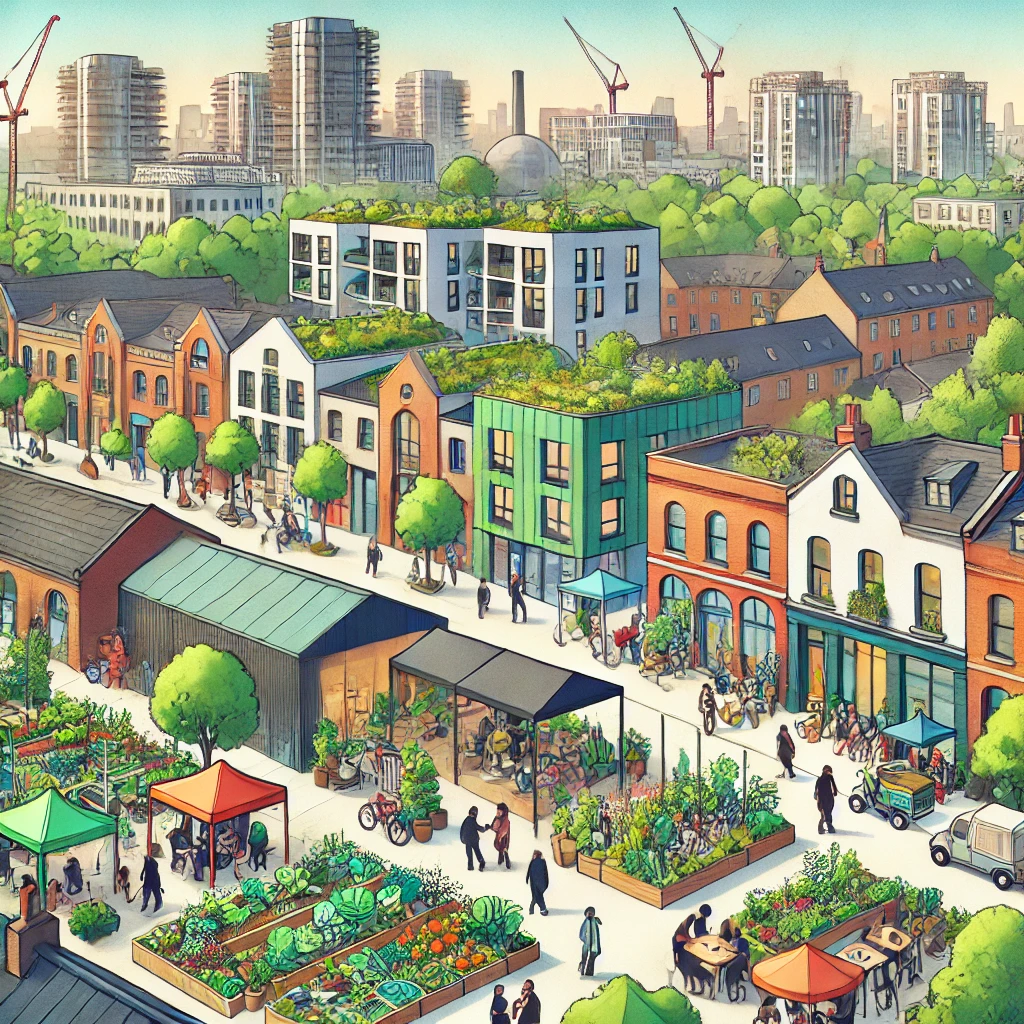
As urban centres across the UK and globally grapple with the pressures of economic growth, population change, and post-pandemic recovery, urban regeneration has emerged as a critical tool for revitalizing neglected areas. However, with regeneration often comes the looming spectre of gentrification—a process that can displace long-standing communities and erode the very cultural fabric that makes a place unique. Striking a balance between sustainable growth and the preservation of community identity is not just a challenge but a necessity for planners, local authorities, and developers.
The Double-Edged Sword of Gentrification
Gentrification, often defined as the transformation of an area through an influx of higher-income residents, can lead to improved infrastructure, increased property values, and economic rejuvenation. However, the downside is clear: as property prices rise, existing lower-income residents may find themselves priced out of the areas they’ve lived in for decades. This displacement can fracture communities, displace small businesses, and lead to a loss of local character.
Studies such as those by Lees, Slater, and Wyly (2008) suggest that gentrification often disproportionately affects marginalized groups, exacerbating social inequalities. Yet, regeneration without gentrification remains possible, provided that careful planning and inclusive strategies are implemented.
Community-Centric Regeneration: Learning from Success Stories
The challenge for urban planners and local authorities lies in developing regeneration schemes that improve the area for all its residents, not just new ones. In this context, inclusive regeneration models, which focus on both physical improvements and social sustainability, are emerging as a way to address gentrification.
One such model is the concept of Community Land Trusts (CLTs). CLTs provide a mechanism for ensuring that land remains under the control of the community, preventing the wholesale displacement of existing residents. A study by Davis (2010) found that in areas where CLTs were implemented, not only did housing remain affordable, but the communities also reported higher levels of civic engagement and satisfaction. Cities like Liverpool and Bristol have already successfully used CLTs to protect housing affordability while enabling regeneration.
Another approach is socially responsible development, where local authorities engage in genuine, bottom-up consultation with communities before breaking ground on projects. The success of the Glasgow Canal Regeneration Project is often cited as a case where community engagement helped shape development, ensuring that existing residents remained at the heart of decision-making. The result? A regenerated area where new businesses and residents coexist with long-standing communities, enhancing the local economy without displacing those who had contributed to the area’s identity for years.
Sustainability as the Core of Regeneration
Sustainability is not only about green buildings or eco-friendly public spaces; it’s about creating environments that support long-term social cohesion and economic inclusivity. Local authorities must adopt a holistic approach to regeneration that addresses housing, local jobs, cultural infrastructure, and green spaces, all while safeguarding affordability and accessibility.
“True regeneration should be based on a principle of social justice,” as urbanist Jane Jacobs famously noted. Her work underscores the importance of maintaining diverse, vibrant communities rather than focusing solely on physical renewal. Sustainable regeneration initiatives, like the one seen in the Elephant and Castle redevelopment in London, which implemented affordable housing schemes alongside new development, provide a framework for balancing growth and community needs.
The Role of Local Authorities and Developers: Collaboration is Key
For local authorities and developers, the goal should not be to prevent change but to manage it in ways that protect community interests. Here are key strategies that can help mitigate the negative effects of gentrification:
- Inclusive Housing Policies: Ensure a proportion of new developments include affordable housing to cater to low- and middle-income families. Policies such as “inclusionary zoning” can mandate that a percentage of new units remain below market rate. Research by the London School of Economics (2016) indicates that such policies help maintain a socio-economic mix in regenerated areas.
- Community Benefits Agreements (CBAs): Developers can enter into CBAs with local authorities, promising to deliver certain community benefits, such as local job creation, affordable retail spaces, or community centres. In New York, the redevelopment of the Atlantic Yards included a CBA that ensured the development provided direct benefits to residents, including affordable housing and job training programs.
- Participatory Planning: Engage with residents early and often to ensure their voices are heard in the planning process. According to a report by the Royal Town Planning Institute (RTPI), community participation can lead to better project outcomes, higher local support, and more socially sustainable results.
A Call to Action: Expertise in Action
The challenges of urban regeneration, particularly in balancing growth and community preservation, are significant but not insurmountable. Through careful planning, collaboration, and a commitment to social equity, local authorities and developers can deliver projects that benefit all stakeholders—old and new.
At this crucial moment in urban development, it’s imperative that cities across the UK and beyond adopt forward-thinking, inclusive, and sustainable regeneration strategies. By leveraging my expertise in placemaking, urban regeneration, and community engagement, I am equipped to help organizations navigate these challenges. Whether you’re a local authority seeking to develop a long-term regeneration plan or a developer aiming to create sustainable communities, I can provide actionable insights and strategies to ensure your project is both economically viable and socially responsible.
Let’s build places that work for everyone—together.
 Jason I J Smith