High Street Rental Auctions: what the new powers mean — and why Gloucester’s heritage makes the stakes higher

The UK’s High Street Rental Auctions (HSRAs) are now live across England. Enabled by Part 10 of the Levelling-up and Regeneration Act 2023 and commenced on 2 December 2024, they give local authorities a discretionary power to force the letting—by auction—of qualifying, long-vacant high-street premises on short leases (typically 1–5 years). Central government’s non-statutory guidance, updated in June 2025, sets out the mechanics from notices to template leases and auction packs.

How it works (in plain English)

If a property on a designated high street or in a town centre has been vacant for at least 366 days within the previous 24 months, a council may serve notices and run an auction for a short tenancy. The owner does not have a veto (nor do superior landlords or mortgagees), though there are opportunities to engage, propose a tenancy, or challenge via counter-notice on defined grounds. The aim is to get inert space back into productive, public-facing use (retail, services, leisure, community, culture).

The government has issued a full suite of forms (initial/final letting notices, counter-notice) and model tenancy documents to standardise the process. A June 2025 update also recommends entering a Land Registry restriction at notice stage so incoming parties can see an auction is in train.

What it means for landlords

For responsive, actively-marketing owners, the immediate message is “work with your council, or the council may step in.” The regime can compress voids but reduces control over tenant selection, lease terms and timing. Industry commentary has warned of lender concerns, residual liabilities, and the risk that low-rent short lets could reset local comparables—though the counter-argument is that activation beats blight.

Two important guard-rails temper the power:

It’s discretionary: councils choose when to use it and must follow the statutory tests and guidance.

It doesn’t trump other consents: planning permission (where needed) and Listed Building Consent still bite; the auction lease cannot authorise unlawful works.

What it means for places

Academic and policy literature on high streets consistently links persistent vacancy with lower footfall, safety perceptions and investment confidence. HSRAs are a behavioural nudge with teeth: they create a default path to occupation when negotiation stalls. Government frames them as part of a place-activation toolkit rather than a full market fix (they don’t address business rates, online competition or structural catchments).

The Controversies

Critics—particularly landlord bodies—argue HSRAs erode property rights, risk mis-matching tenants to buildings, and socialise costs (e.g., compliance, basic fit-out) onto owners for limited upside on short terms. Proponents counter that auctions are targeted at long-term vacancies and include procedural safeguards, while the broader public interest in re-animating centres justifies intervention.

There’s also a live debate about quality: will short leases encourage low-capex, pop-up uses that churn, or can councils curate resilient, community-anchoring occupiers? Practice will vary by place and by how assertively councils use pre-auction engagement and conditions.

Applying it to Gloucester: a city rich in listed fabric

Gloucester is unusually heritage-dense: ~680–700 listed buildings, 14 conservation areas, and a nationally significant docks and medieval street pattern. That richness is an asset—and a constraint.

In that context, HSRAs could help re-fill stubborn voids along the Gate Streets and routes into the Docks, with likely targets being small and medium retail frontages where vacancy drags on the public realm. Politically, Gloucester has recently mooted adopting and using HSRA powers, signalling a willingness to deploy them where voluntary routes fail.

But the heritage overlay matters:

Listed Building Consent still applies. Any works affecting character—shopfront changes, signage, internal fabric alterations—require consent regardless of an auction outcome. Early dialogue with the City Conservation Officer and use of model shopfront guidance will be essential to avoid delay or enforcement.

Fit-out economics are tighter in listed stock. Short leases may not support deep retrofits (M&E, accessibility, thermal upgrades). Councils may need to shape auction packs with realistic works scopes, staged licences for alterations, and signpost grant/heritage funding where available.

Curation over churn. Given Gloucester’s concentrated heritage streetscapes, the city will benefit most if auctions prioritise public-facing, spill-out and cultural uses that animate frontages without heavy interventions.

A pragmatic read-out for Gloucester

Used sparingly and well, HSRAs could be a useful backstop: they shift bargaining power on a handful of long-term empties, restore overlooked frontages, and send a clear signal that vacancy has a cost. But success will hinge on heritage-literate execution—tight auction packs, early conservation input, and realistic lease terms that reflect the additional time and cost of working in listed buildings.

For landlords of Gloucester’s historic properties, the takeaway is simple: re-engage early (before notices land), assemble your heritage and building-regulations strategy, and be ready to propose a credible letting that beats the auction. For the council, transparently linking HSRAs to a wider place strategy (public realm, wayfinding, rates relief lobbying, and active travel to boost footfall) will help ensure auctions are a means, not the end.


Sources & further reading: Government guidance and templates (updated June 2025); the Levelling-up and Regeneration Act 2023 (Part 10); Parliamentary Library briefing (Feb 2025); and sector analyses from Dentons, TLT and others on lender/landlord implications. Gloucester heritage context from Historic England and City Council materials.

Sustainable Urban Regeneration: Balancing Growth and Community in the Face of Gentrification

Featured

As urban centres across the UK and globally grapple with the pressures of economic growth, population change, and post-pandemic recovery, urban regeneration has emerged as a critical tool for revitalizing neglected areas. However, with regeneration often comes the looming spectre of gentrification—a process that can displace long-standing communities and erode the very cultural fabric that makes a place unique. Striking a balance between sustainable growth and the preservation of community identity is not just a challenge but a necessity for planners, local authorities, and developers.

The Double-Edged Sword of Gentrification

Gentrification, often defined as the transformation of an area through an influx of higher-income residents, can lead to improved infrastructure, increased property values, and economic rejuvenation. However, the downside is clear: as property prices rise, existing lower-income residents may find themselves priced out of the areas they’ve lived in for decades. This displacement can fracture communities, displace small businesses, and lead to a loss of local character.

Studies such as those by Lees, Slater, and Wyly (2008) suggest that gentrification often disproportionately affects marginalized groups, exacerbating social inequalities. Yet, regeneration without gentrification remains possible, provided that careful planning and inclusive strategies are implemented.

Community-Centric Regeneration: Learning from Success Stories

The challenge for urban planners and local authorities lies in developing regeneration schemes that improve the area for all its residents, not just new ones. In this context, inclusive regeneration models, which focus on both physical improvements and social sustainability, are emerging as a way to address gentrification.

One such model is the concept of Community Land Trusts (CLTs). CLTs provide a mechanism for ensuring that land remains under the control of the community, preventing the wholesale displacement of existing residents. A study by Davis (2010) found that in areas where CLTs were implemented, not only did housing remain affordable, but the communities also reported higher levels of civic engagement and satisfaction. Cities like Liverpool and Bristol have already successfully used CLTs to protect housing affordability while enabling regeneration.

Another approach is socially responsible development, where local authorities engage in genuine, bottom-up consultation with communities before breaking ground on projects. The success of the Glasgow Canal Regeneration Project is often cited as a case where community engagement helped shape development, ensuring that existing residents remained at the heart of decision-making. The result? A regenerated area where new businesses and residents coexist with long-standing communities, enhancing the local economy without displacing those who had contributed to the area’s identity for years.

Sustainability as the Core of Regeneration

Sustainability is not only about green buildings or eco-friendly public spaces; it’s about creating environments that support long-term social cohesion and economic inclusivity. Local authorities must adopt a holistic approach to regeneration that addresses housing, local jobs, cultural infrastructure, and green spaces, all while safeguarding affordability and accessibility.

“True regeneration should be based on a principle of social justice,” as urbanist Jane Jacobs famously noted. Her work underscores the importance of maintaining diverse, vibrant communities rather than focusing solely on physical renewal. Sustainable regeneration initiatives, like the one seen in the Elephant and Castle redevelopment in London, which implemented affordable housing schemes alongside new development, provide a framework for balancing growth and community needs.

The Role of Local Authorities and Developers: Collaboration is Key

For local authorities and developers, the goal should not be to prevent change but to manage it in ways that protect community interests. Here are key strategies that can help mitigate the negative effects of gentrification:

  1. Inclusive Housing Policies: Ensure a proportion of new developments include affordable housing to cater to low- and middle-income families. Policies such as “inclusionary zoning” can mandate that a percentage of new units remain below market rate. Research by the London School of Economics (2016) indicates that such policies help maintain a socio-economic mix in regenerated areas.
  2. Community Benefits Agreements (CBAs): Developers can enter into CBAs with local authorities, promising to deliver certain community benefits, such as local job creation, affordable retail spaces, or community centres. In New York, the redevelopment of the Atlantic Yards included a CBA that ensured the development provided direct benefits to residents, including affordable housing and job training programs.
  3. Participatory Planning: Engage with residents early and often to ensure their voices are heard in the planning process. According to a report by the Royal Town Planning Institute (RTPI), community participation can lead to better project outcomes, higher local support, and more socially sustainable results.

A Call to Action: Expertise in Action

The challenges of urban regeneration, particularly in balancing growth and community preservation, are significant but not insurmountable. Through careful planning, collaboration, and a commitment to social equity, local authorities and developers can deliver projects that benefit all stakeholders—old and new.

At this crucial moment in urban development, it’s imperative that cities across the UK and beyond adopt forward-thinking, inclusive, and sustainable regeneration strategies. By leveraging my expertise in placemaking, urban regeneration, and community engagement, I am equipped to help organizations navigate these challenges. Whether you’re a local authority seeking to develop a long-term regeneration plan or a developer aiming to create sustainable communities, I can provide actionable insights and strategies to ensure your project is both economically viable and socially responsible.

Let’s build places that work for everyone—together.

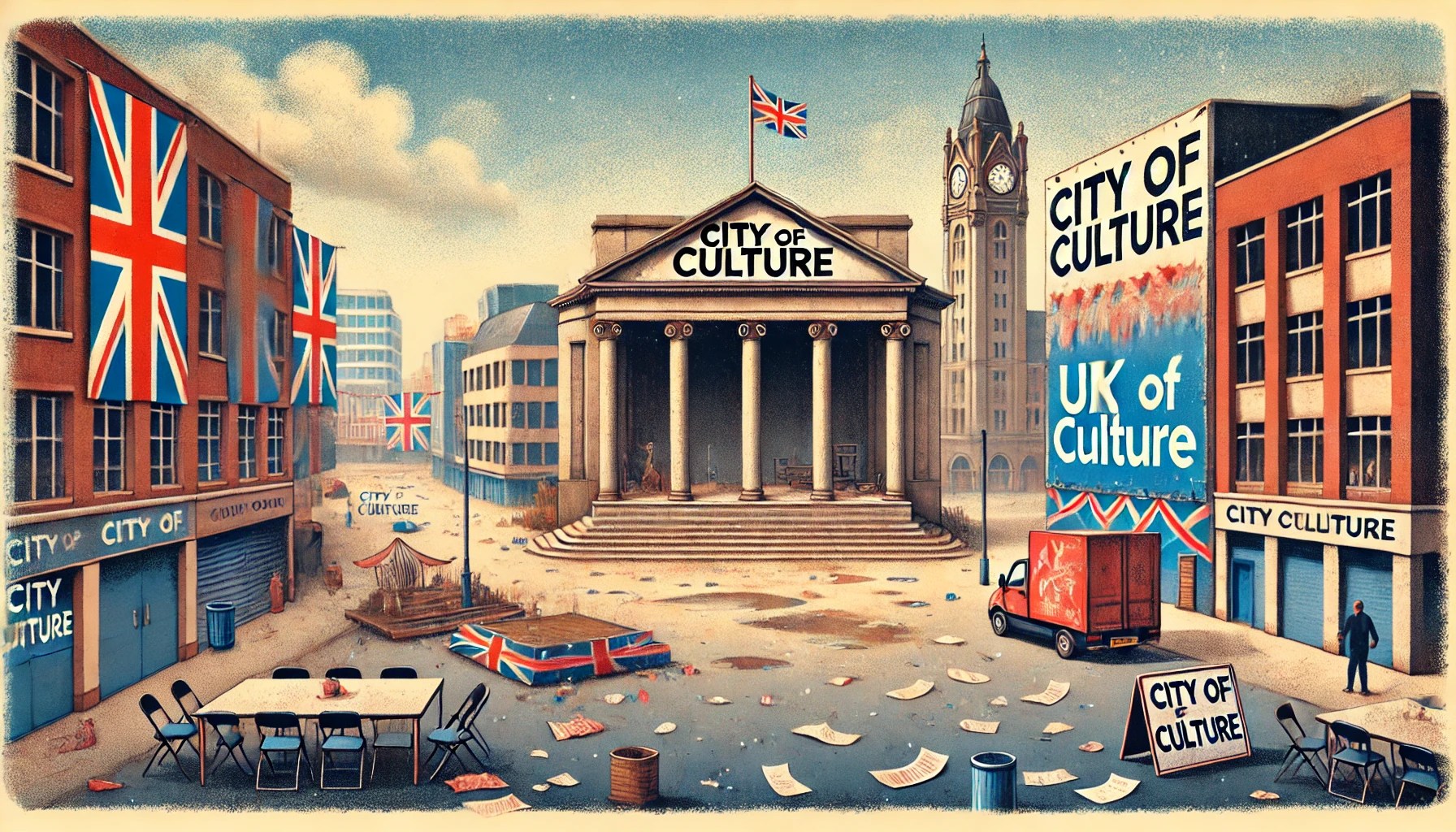
Addressing the Shortcomings of the UK City of Culture Initiative: Toward a More Inclusive and Locally-Driven Model

Featured

Introduction

The UK City of Culture initiative, despite its noble intentions, has faced significant criticisms for failing to achieve its promised economic, social, and cultural impacts. Key shortcomings identified include the imposition of external experts, cultural imperialism driven by centralized decision-making, a focus on “quality” over community relevance, and governance structures that lack genuine local representation. Additionally, the initiative has been criticized for its lack of investment in physical cultural infrastructure, which could provide long-term benefits to local communities. This article explores these issues and suggests an alternative model that prioritizes local engagement, empowerment, and sustainable cultural development.

Issues and Shortcomings

The “Parachuting In” of External Experts:

  • One of the primary criticisms of the UK City of Culture initiative is the reliance on external “experts” who move from city to city, often bringing with them generic cultural strategies that do not align with the unique contexts of the host cities. These experts, many of whom are temporary consultants or cultural professionals, tend to impose a one-size-fits-all approach that overlooks local needs, aspirations, and talents. The issue lies in the parasitic nature of this model: these experts often extract value from local communities without contributing to the long-term development of local cultural ecosystems.
  • A more effective approach would involve genuine support for local groups, organizations, and existing infrastructure. This can be achieved by prioritizing funding for grassroots cultural initiatives and ensuring that local cultural leaders and practitioners play a central role in decision-making processes. For example, establishing a requirement that a significant percentage of cultural programming and funding is led by local organizations would help to build capacity, retain local talent, and ensure the cultural program is genuinely reflective of local identity.
  1. Cultural Imperialism by Centralized, Middle-Class “Culture Vultures”:
    • The current model of the UK City of Culture has been criticized for its top-down approach, where decision-making is often concentrated among a small group of individuals based in London or other metropolitan centers. These decision-makers, who are typically from middle-class backgrounds, may impose cultural values, themes, and agendas that do not resonate with the local population. This approach often marginalizes local voices and overlooks the rich, diverse cultural practices that exist within the community.
    • A shift towards a more localized model of cultural development would involve decentralizing the control over cultural programming and funding. Decision-making bodies should be composed primarily of local representatives, including community leaders, local artists, and cultural organizations. Additionally, funding criteria should be restructured to prioritize projects that reflect local cultural traditions, histories, and aspirations, rather than conforming to externally imposed standards of “excellence” or “innovation.”
  2. Focus on “Quality” Over Community Relevance:
    • The emphasis on so-called “quality” cultural programming often reflects a narrow, elitist understanding of culture, which may be disconnected from what local communities value or need. This focus on “quality” is frequently equated with the replication of cultural forms and practices associated with London-centric or metropolitan arts institutions. For instance, programs often prioritize contemporary art forms, such as avant-garde theatre or experimental music, over local cultural expressions that may be more meaningful to residents, such as local history, folk traditions, or community festivals.
    • To counter this cultural snobbery, the UK City of Culture initiative should adopt a broader and more inclusive definition of culture that values all forms of cultural expression, including those that are rooted in local traditions and everyday life. This could involve introducing participatory budgeting practices, where local residents are actively involved in deciding which cultural projects receive funding. By giving communities a direct voice in shaping the cultural agenda, the initiative can ensure that programming is aligned with local interests and needs.
  3. Creation of Governance Bodies That Are Not Truly Local:
    • Governance structures for the City of Culture initiative often lack true local representation, instead prioritizing individuals or organizations that meet the requirements of Arts Council England (ACE) or other national bodies. This results in governance bodies that may not have a deep understanding of the local context or a genuine commitment to local development. Additionally, these bodies may prioritize meeting the expectations of national funders over addressing the needs of the local community.
    • To address this issue, governance bodies should be reconstituted to reflect the local population genuinely. This could involve mandating that a majority of board members are drawn from local communities and ensuring diverse representation across socioeconomic, cultural, and demographic lines. Furthermore, the governance framework should be designed to be accountable to local communities, with regular public consultations and transparent reporting on decision-making processes and outcomes.
  4. Overemphasis on Issues Favored by Central Authorities:
    • The City of Culture initiative often focuses on issues favored by central authorities, such as youth engagement, race relations, or climate change, which, while important, may not be the primary concerns of local communities. This emphasis can lead to a disconnect between the cultural programming and the issues that local residents care about, such as local history, heritage, or economic development.
    • A more community-centered approach would involve conducting comprehensive local needs assessments to understand the specific issues, challenges, and opportunities within each city. Cultural programming should then be tailored to address these locally identified priorities. For example, if a community values its industrial heritage, programming could focus on preserving and celebrating that history through exhibitions, storytelling projects, and educational initiatives.
  5. Lack of Investment in Physical Cultural Infrastructure:
    • One of the most significant shortcomings of the UK City of Culture initiative is its lack of focus on investing in physical cultural infrastructure, such as museums, theatres, and cultural hubs. Arts Council England (ACE) and other funding bodies tend to prioritize funding for temporary events, exhibitions, and performances, which can provide short-term cultural engagement but do little to build lasting cultural capacity or infrastructure within cities.
    • Research indicates that investment in physical cultural infrastructure can have significant long-term benefits for local economies. A study by the Royal Society of Arts (2019) found that for every £1 invested in cultural infrastructure, there is a return of approximately £4 in local economic activity due to increased tourism, job creation, and local spending. Furthermore, physical infrastructure provides a lasting resource for local communities, supporting cultural education, engagement, and participation long after the City of Culture designation has ended.
    • However, critics argue that investment in infrastructure can be costly and may divert funds away from other cultural initiatives. Some also suggest that infrastructure projects can become “white elephants” if not well-planned or aligned with local needs, potentially leading to underused or abandoned facilities. Nonetheless, these risks can be mitigated by involving local communities in the planning and decision-making processes to ensure that new infrastructure aligns with local aspirations and has a clear, sustainable purpose.
  6. Failure to Build on Endemic Talent and Organizations:
    • The current model often overlooks or underutilizes existing local talent and cultural organizations, opting instead to import external acts or exhibitions that may not resonate with local communities. This not only undermines local cultural ecosystems but also results in a missed opportunity to cultivate and promote homegrown talent.
    • A more effective approach would involve mapping and actively supporting local cultural assets, including artists, musicians, writers, and community organizations. Funding and resources should be directed toward initiatives that promote and develop local talent, ensuring that the cultural program is not only representative of the local community but also contributes to the long-term growth of its cultural sector.
  7. Inadequate Community Engagement and Participation:
    • Many City of Culture programs fail to engage local communities meaningfully, resulting in a sense of disconnection or even resentment toward the initiative. This can be exacerbated by the use of inaccessible language, high ticket prices, or the perceived elitism of certain cultural events.
    • To foster genuine community engagement, the initiative should prioritize participatory and accessible cultural activities, such as open workshops, street festivals, or community theatre projects. Moreover, efforts should be made to remove barriers to participation, such as by offering free or low-cost entry to events and ensuring that marketing and communication materials are clear, inclusive, and representative of the local community.

Conclusion

The UK City of Culture initiative has the potential to deliver meaningful economic, social, and cultural benefits, but it must address its current shortcomings to realize this potential fully. The program’s failure to invest in physical cultural infrastructure, over-reliance on external experts, centralized decision-making, focus on “quality” over community relevance, and inadequate community engagement highlight the need for a more localized and inclusive approach. By prioritizing local engagement, decentralizing decision-making, broadening the definition of culture, creating truly representative governance structures, focusing on sustainable economic planning, supporting endemic talent, and fostering genuine community participation, the initiative can become a more inclusive and impactful model for cultural development. Moving forward, these changes will be essential to ensuring that the UK City of Culture is not only a celebration of culture but also a catalyst for meaningful and lasting change