Jason I J Smith

Place, Growth, Investment, Marketing

Jason I J Smith

Statistics on proposed Gloucester BID area

Key Statistics

Last visited: December 2016

11.2%GB All Vacancy Rate
12.3%GB Retail Vacancy Rate
8.2%GB Leisure Vacancy Rate
12.1%All Vacancy Rate
12.7%Retail Vacancy Rate
10.3%Leisure Vacancy Rate

Current Data

619Total Units
464All Retail Units
155All Leisure Units
75Total Vacant Units
59Vacant Retail Units
16Vacant Leisure Units

Detailed classifications

CLASSIFICATION THIS AREA GB
No. % %
212 37 29
16 2.73 2.2
2 0.34 0.88
17 2.9 2.5
14 2.39 2.96
4 0.68 0.41
5 0.85 0.78
2 0.34 2.16
21 3.58 2.8
62 10.58 4.92
2 0.34 0.71
9 1.54 0.74
13 2.22 3.5
8 1.37 1.16
13 2.22 1.17
3 0.51 0.57
21 3.58 1.69
49 8 13
8 1.37 1.09
15 2.56 2.12
26 4.44 7.46
154 26 27
2 0.34 1.61
15 2.56 2.31
15 2.56 2.43
16 2.73 3.19
79 13.48 11.76
1 0.17 0.65
3 0.51 0.92
4 0.68 0.51
9 1.54 2.03
5 0.85 0.36
5 0.85 0.68
141 24 25
4 0.68 1.76
33 5.63 5.09
62 10.58 10.29
19 3.24 2.76
23 3.92 4.78
30 5 6
3 0.51 1.01
6 1.02 1.91
21 3.58 3.34
75 12.1 11.2
 Figures copyright Local Data Company

Gloucester top 15 place in UK for Heritage


Gloucester is one of the top places in the country when it comes to English heritage.

The city came in at number 13 in the Royal Society for Arts’ annual Heritage Index, beating the likes of Tewkesbury, Cheltenham and even parts of London.

The Index is based both on the amount of heritage sites an area can boast, and the way in which they are utilised to create a distinct local identity.

Gloucester scored well on both counts, doing well in particular for the number of historic buildings in the area.

In total, there are 35 Grade I listed buildings, 49 Grade II* listed buildings and 379 Grade II listed buildings in the city.

Gloucester also did well in terms of museums, archives and artifacts activities, hosting 16 Heritage Open Days in 2016 and making the most of generous Heritage Lottery Fund and Arts Council England funding.

Commenting on the 2016 Heritage Index, Matthew Taylor, RSA Chief Executive, said: ““At its best, a proper understanding of heritage – which goes beyond protecting history – fuels passion, pride and a unique place identity.

“This year’s RSA Heritage Index shows how some localities have grasped the opportunity heritage provides.”


Data table:


Top 15 heritage hotspots in England

1 / City of London

2 / Kensington and Chelsea

3 / Westminster

4 / Scarborough

5 / West Somerset

6 / South Lakeland

7 / Gosport

8 / Oxford

9 / Norwich

10 / Weymouth and Portland

11 / Hastings

12 / Cambridge

13 / Gloucester

14 / Purbeck

15 / Copeland

Jason Smith, CEO Marketing Gloucester commented “This is a wonderful independent recognition of the rich heritage of the city and all the hard work that goes into promoting and protecting that heritage by the Civic Trust and other organisations in the city. A record 4million people a year are now visiting the city, many of them specifically because of Gloucester’s heritage.  It is important that we recognise the significant impact this has on supporting 4100 jobs in the city and continue to promote our fantastic assets.   According to the Royal Society for Arts’ annual Heritage Index Gloucester can truly be classed as a “premier league” city for Heritage vying with Cambridge and Hastings, and it’s easy to understand why when one looks at attractions such as the Cathedral, Historic Docks, St Mary de Crypy and Lllanthony Priory and so-on”


Extraordinary data showing huge growth in tourism in Gloucester

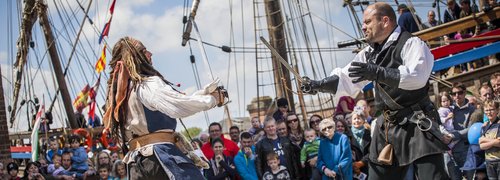
gloucester-tall-ships-1429542755-custom-0

Gloucester Tall Ships – one of the events driving tourism

Latest provisional data from independent research organisation The South West Research Company Ltd shows the extraordinary success Gloucester has had in attracting tourists to the city since 2013 with the Cathedral city overtaking Cheltenham in 2015.

Some of the highlights of the report include:

  •  Total visitor spend in Gloucester in 2015 exceeded £200 million a massive 68% increase from 2013
  • Over 4100 Jobs supported by tourism in Gloucester equivalent to 7% of total employment in the city with an additional 1,300 jobs created since 2013
  • A massive jump in day visitors to 3.1 million a year in 2015 from 2 million in 2013
  • 11% growth in hotel bookings over the period
  • Gloucester showing fastest growth in tourism for the whole county

Paul James, Chair of Marketing Gloucester “We can be immensely proud of how the hard work and investment put into developing Gloucester as a tourist destination is showing returns.  All areas are showing extraordinary results which beat both regional and national trends”


When asked if there were any indicators for the future, Jason Smith, Chief Executive of Marketing Gloucester responded “One thing the figures highlight is that with such high occupancy rates, it is a matter of urgency that we increase the number of Hotels within the city in order to not create barriers to growth”

Marketing Gloucester is an organisation that is owned by Gloucester City Council, with a board of Private sector directors, Chaired by leader of the city council, Councillor Paul James.  Along with being the tourism and marketing body for the city is also responsible for inward investment and events


Gloucestershire
2015
Cheltenham Gloucester Gloucestershire
UK trips 311,200 292,300 1,893,000
Overseas trips 45,100 42,800 258,000
Total trips 356,300 335,100 2,151,000
Comparison v 13 % -3 25 16
UK nights 688,000 626,000 4,504,000
Overseas nights 308,000 269,000 1,696,000
total nights 996,000 895,000 6,200,000
Comparison v 13 % -16 11 4
UK spend £51,246,000 £44,287,000 £314,225,000
Overseas spend £19,403,000 £17,005,000 £111,497,000
Total spend £70,649,000 £61,292,000 £425,722,000
Comparison v 13 % -8 5%
Tourism day visits 1,822,000 3,165,000 18,029,000
Comparison v 13 % -4 52 -3
Tourism day visit spend £75,798,000 £130,547,000 £625,385,000
Comparison v 13 % 10 75 8
Other visitor related spend £7,713,000 £8,459,000 £43,420,000
Comparison v 13
Total visitor related spend £154,160,000 £200,298,000 £1,094,527,000
Comparison v 13 % 6 68 16
Total business turnover £198,493,000 £254,715,000 £1,525,183,000
Comparison v 13 -1 55 28
GVA £112,290,000 £144,919,000 £859,316,000
Total GVA £11,632,000,000
Tourism as % of total 7%
Comparison v 13 % -0.6 35.7
Staying tourist supported employment
Direct FTE employment 915 802 5,443
Indirect &  induced FTE employment 480 423 3,751
Actual jobs 1,854 1,618 12,062
% of employment 3% 3% 4%
Comparison v 13 % -13 27 8
Day visitor supported employment
Direct FTE employment 735 1,233 6,168
Indirect &  induced FTE employment 340 582 3,984
Actual jobs 1,477 2,491 13,654
% of employment 3% 4% 4%
Comparison v 13 % 0 65 -4

Britain’s visitor economy facts

Since 2010 tourism has been the fastest growing sector in the UK in employment terms. Britain is forecast to have a tourism industry worth over £257 billion by 2025.

The big picture – the tourism economy: delivering jobs and growth

Infographic displaying statistics in tourism jobs from The Deloitte Tourism: jobs and growth report 9.6% of total UK jobs

Source: Tourism: jobs and growth. Deloitte November 2013

The Deloitte Tourism: jobs and growth report found that the marginal revenue required to create a job in UK tourism is estimated to be around £54,000. For every 1% increase in total expenditure in UK tourism, it might be expected that full time equivalent employment will increase by 0.89%.

The sector is predicted to grow at an annual rate of 3.8% through to 2025 – significantly faster than the overall UK economy (with a predicted annual rate of 3% per annum) and much faster than sectors such as manufacturing, construction and retail.

Infographic displaying how tourism is predicted to grow from The Deloitte Tourism: jobs and growth report - tourism will be worth £257.4 bn by 2025

Source: Tourism: jobs and growth. Deloitte November 2013

Britain will have a tourism industry worth over £257 billion by 2025 – just under 10% of UK GDP and supporting almost 3.8 million jobs, which is around 11% of the total UK number.

Tourism’s impact is amplified through the economy, so its impact is much wider than just the direct spending levels. Deloitte estimates the tourism GVA multiplier to be 2.8 – meaning that for every £1,000 generated in direct tourism GVA there is a further £1,800 that is supported elsewhere in the economy through the supply chain and consumer spending.

Inbound tourism will continue to be the fastest growing tourism sector – with spend by international visitors forecast to grow by over 6% a year in comparison with domestic spending by UK residents at just over 3%. The value of inbound tourism is forecast to grow from over £21bn in 2013 to £57bn by 2025, with the UK seeing an international tourism balance of payments surplus in 2023, almost forty years since the UK last reported a surplus.

Download the full report from Deloitte to discover tourism’s central role in creating new jobs across Britain (PDF, 3.93MB), commissioned by VisitBritain in 2013.

Similar reports were under taken in 2010 (PDF, 2.5MB) and in 2008 (PDF, 1.48MB).

Inbound tourism to the UK

The 36.1 million overseas visitors who came to the UK in 2015 spent £22.1 billion – both setting records. These figures represent a 5% increase in volume and 1% (nominal) increase in value compared with 2014.

In 2015 the UK ranked eighth in the UNWTO international tourist arrivals league, a position held for a number of years, behind France, USA, Spain, China, Italy, Turkey and Germany.  The UK accounted for 2.9% of global arrivals in 2015.

In 2015 the UK was in sixth place in the international tourism earnings league (down from fifth in 2014) behind the USA, China, Spain, France and Thailand according to UNWTO figures.

The UK accounted for 3.4% of international tourism receipts in 2015.

In 2015 France, the USA and Germany were the top three markets in terms of number of visits to the UK accounting for 30% of visits.  The top three markets measured in terms of visitor spend were the same markets although in a different order (USA, France and Germany) accounting for 27% of all overseas visitor spend in the UK.

London accounts for 54% of all inbound visitor spend, the rest of England 34%, Scotland 8% and Wales 2%.

A separate page is dedicated to covering key Inbound Tourism Facts.

Aethelflaed Rises – Getting ready for 2018

Important work is being done to repair parts of St Oswald’s Priory in time to commemorate in 2018,  1,100 years since the death of  Aethelflaed, Lady of Mercia and founder of St Oswald’s Priory, 

Five areas of stone which have been worn down to their core have been identified at the site following a recent survey. Stone replacement is taking place to repair the grade I historic monument. The stonework along the top of the main wall is in poor condition, as is the stonework on the top of the transept arch. These areas will be repointed and any loose stone either fixed back into the structure or removed. Work will extend from the top of the structure to four rows of stones down.

The work will take place over the next couple of months, weather dependent.

The work has to be done by hand and an experienced team of stonemasons and conservators are currently working on it. Whilst the scaffolding is erected, it gives a fantastic and rare opportunity to inspect the top of the monument which is normally hidden from view. It also offers an opportunity for a detailed inspection of all areas of the monument.

The site, exposed to elements over the last 900 years has meant the ruin has suffered from weathering.

The repairs which are being undertaken will ensure that the monument will continue to be accessible for visitors. Where possible, old cement repairs and pins will be fully removed and the repairs carried out in traditional methods.

Cllr Paul James, leader of Gloucester City Council, said: “St Oswald’s Priory is an iconic landmark for Gloucester. It has a rich history which we want our residents and visitors to learn about and enjoy. Our officers and external specialists are working hard to make the site safe so it can continue to be viewed by local people and tourists.”


History of the site

St. Oswald’s Priory was founded by Lady Aethelflaed of Mercia, daughter of Alfred the Great, around 900. The Priory Church, initially dedicated to St. Peter, was constructed from recycled Roman stones. At this time it was a bold and unusual move to build a church as there were frequent Viking raids.

At first it was a Christian cemetery, but in 909 the relics of Saint Oswald were taken there. The building was rededicated to the saint and it is believed Aethelflaed and her husband were later interred in the crypt.

Archaeological excavations in the 1970s revealed a 10th century fragment of carved slab from the grave of someone extremely important. In the centuries that followed St Oswald’s grew rich as a place of pilgrimage and was at the centre of a large parish.

By the time of the Norman Conquest the place was in decline. It was taken over by the Archbishopric of York and its secular canons replaced by Augustinian ones in 1153. Although the building was subsequently repaired and enlarged – the arches are 12th and 13th century – it was almost literally in the shadow of the more successful Abbey of St. Peter, now Gloucester Cathedral.

In 1548 it became the parish church of St. Catherine. For a while it was a highly popular place of worship, but then came the Civil War and the Siege of Gloucester. Largely destroyed by Royalist cannon fire, the church was eventually demolished in 1653 and the stone was used to rebuild a new market house. Today the northern arcade of the nave survived and are managed and maintained by Gloucester City Council as a picturesque ruin in a park off Archdeacon Street.


How Amazon drones will effect independent High Street Retailers

The British government has granted Amazon permission to begin flying drones and start testing deliveries, in advance of the UK launch of its planned Amazon Prime Air service.

In a move that could further shake things up for Britain’s smaller local retailers, the US online retail giant has been cleared to fly drones further than the line of sight of an operator in UK airspace by the government and the UK Civil Aviation Authority (CAA).

Amazon will be able to test sensors to see if drones crash into buildings or objects, as well as test how many drones one operator can fly without losing control.

The development sees the online retailer take a step closer to rolling out Amazon Prime Air across the UK. The new service will aim to deliver products to customers via drone within 30 minutes of ordering, requiring Amazon to stock products in warehouses near enough to homes and offices to reach customers in under half an hour.

While in reality only a limited set of products may be available for immediate delivery at any one time, with other items available via an overnight express service, Amazon Prime Air is expected to deter some customers from shopping with local retailers.

It is not the first of Amazon’s new services to be viewed by some as a threat to small suppliers and local retailers.

Serious concerns have been raised about Amazon Prime Now – the company’s superfast delivery service – about how it might impact local economies by drawing custom away from independent retailers.

Free for Amazon Prime members, “Now” offers same-day delivery within two hours. But, when introduced in Paris in June this year, mayor of the French capital Anne Hidalgo claimed that the service would “seriously destabilise the balance of Parisian businesses”.

Small business owners have complained about the barriers to entry Prime Now builds, including free and speedy delivery.

In London, however, small independent food retailers have welcomed AmazonFresh – Amazon’s new food delivery service – which sees the firm partner with 90 local food distributers, many of them small delivery companies, to deliver groceries to customers in the city.

“Working with Amazon means our brownies can get to hungry chocoholics in a matter of hours, signaling the end of overbaked, homemade, cakey brownies at dinner parties,” said London-based Bad Brownie co-founder Paz Sarmah.

Amazon has until now been hampered by governments and regulators that have placed limits on how the company can operate drones, including the requisite that a drone must remain within the line of sight of an operator.  It is hoped testing will help identify the rules and regulations needed to move the drone industry forward.

In a statement, a spokesperson for the CAA said: “These tests by Amazon will help inform our policy and future approach as they explore the potential for safe use of drones.”

Have your say on the future of Kings Quarter #FB 29-30 July

Gloucester City Council is holding an event to showcase the proposals for the future of Kings Quarter, Gloucester. Members of the public are invited to an event on Friday 29th July and Saturday 30th July at Unit 11 of Grosvenor House. On Friday, people can drop into anytime between 10am – 7pm and on Saturday the doors will be open between 9am – 1pm. The purpose of the drop in events is for members of the public to view the proposals for the future of Kings Quarter, and give their views. Officer will be on hand to answer any questions that people may have. Kings Quarter is the space opposite the new bus station. Proposals for it include a new indoor market, a hotel, a replacement car park, retail and residential space and community space. Anyone who is unable to attend this event can visit http://www.gloucester.gov.uk to view the plans and have their say using the online feedback form. Alternatively, a second consultation event will take place in the same venue on the 9th and 10th of September. Cllr Paul James, cabinet member for regeneration and leader of Gloucester City Council, said: “It’s really important that we hear the thoughts of local people on the regeneration of Kings Quarter. After all, Gloucester is the city that they’ve chosen to live in so we want to make sure it reflects the vision they have for it too. “Regenerating Gloucester is a project that is very close to my heart, and we need to hear the opinions of local people, so I really encourage people to come along to the event or go online.”

Crack down begins to tackle begging, street drinking, rough sleeping and ‘legal highs’ #Gloucester

21st July 2016

Gloucester City Council cabinet round-up

Following agreement from the city council’s cabinet last night, a crack down will begin to tackle begging, street drinking, rough sleeping and so-called ‘legal highs’.

Yesterday evening, the council’s cabinet agreed to adopt a ‘Safe and Attractive Streets’ policy for the city.

The policy sets out how the council will take a three-pronged approach to tackle street nuisance – engage, support, enforce – to target persistent offenders and work with identified individuals.

Where support isn’t successful, the council will now look to enforce against persistent issues through civil litigation which is legally binding.

Cllr Jennie Dallimore, cabinet member for communities and neighbourhoods said, “We know that some residents, businesses and shoppers have been concerned about begging and rough sleeping in the city centre. The council will always provide support for anyone with genuine need, but we will be taking action against antisocial behaviour and anyone who uses people’s generosity and begs for money when they already have a home and receive financial support.”

The council also agreed plans for a new awareness campaign to raise better understanding of the support available for rough sleepers.

Other key decisions that were approved in last night’s cabinet included:

Improvements to housing conditions in the private rented sector:

A presentation was given by Cllr Kate Haigh, member of Overview and Scrutiny Committee, highlighting the findings and recommendations of the ‘task and finish group’ on actions to improve housing conditions in the private rented sector.

Work will continue until April 2017 to improve the worst privately rented accommodation in houses with multiple occupancy. Funding will also continue to employ an officer to make sure these improvements carry on into the future.

The council awaits the outcome of the recent government consultation to extend mandatory licencing for houses with multiple occupancy, before it takes any further steps to introduce a discretionary licensing scheme.

City Centre Investment Fund allocations:

It was agreed to reallocate funds to maximise the benefits of the City Centre Investment Fund. The Kings Walk Bastion will receive £20,000 to open it up as a tourist attraction. The city’s cultural strategy will receive a £30,000 boost. A figure of £20,000 will be set aside to carry out surveys to help support the planned Business Improvement District and Kings Quarter Regeneration Project. A city centre public realm master plan will be developed with £30,000. The targeted historic grants scheme of £40,000 will include £3000 towards the refurbishment of building plaques and to help the council secure a financial return where appropriate, £50,000 will be allocated for the development of a new policy.

ENDS

Issued by: Sarah Black, Gloucestershire County Council Media Team, 01452 426887,

Kings Walk shopping centre purchased by Vixcroft, planned investment of £5 million

New Kings Walk owner to invest five million into Gloucester city centre showing yet again that the city is becoming a target for investment and recognising the huge growth forecast for the city .

Today Gloucester City Council can announce that Kings Walk shopping centre has been purchased by Vixcroft, who plan to invest £5 million into improving the centre.

Plans to regenerate Gloucester’s city centre have been well underway this year with the new bus station on-site and plans unveiled for improvements to the railway station and the wider Kings Quarter area. Today the next step for regeneration of this area of the city centre can be announced which sees the ownership of Kings Walk shopping centre transfer to Vixcroft from Aviva.

The new owners have a successful track record when it comes to town centre regeneration and plan to invest significantly into improving the shopping centre to help create a brighter future for Gloucester city centre.

In addition to purchasing the shopping centre, Vixcroft have expressed a willingness to work with the city council, and to invest significantly, to deliver the revised Kings Quarter scheme.

The future of the Kings Walk shopping centre plays an integral part in the Kings Quarter regeneration. Plans for the scheme are still being developed, with public consultation due to take place this summer, but proposals include a new indoor market, a new multi-storey car park, a variety of restaurants and shops, some residential development and a hotel.

Local architects are currently working on the master planning for a revised Kings Quarter, which takes into account new plans emerging for the railway station, its car parking and pedestrian connections between the station and the city centre.

Leader of Gloucester City Council, Cllr Paul James, said: “We are grateful to Vixcroft for the confidence they have shown in the Gloucester and its future by making such a substantial investment.

“Vixcroft’s interest in the wider area offers us a way of bringing forward the Kings Quarter scheme more quickly than we otherwise would have been able to.  With the bus station now on site and a new master plan guiding the way forward, we can really start to give this area of Gloucester the transformation it desperately needs.”

Daniel Carter, Chief Executive of Vixcroft, said: “We are making a significant investment in Gloucester because we have seen the progress that has been made in recent years and we recognise the great potential the city has. The council has strongly welcomed our interest in an integrated project, and we want to move on this project at pace. After some thorough public consultation we want to press ahead with making these improvements.

Our plans will enhance the attraction of the city centre to visitors, shoppers and residents.  I am grateful to the city council for their positive response and I look forward to working with them in the months ahead to deliver a transformation of this important area of the city.”

Martyn Chase, of Stanhope, added: “The climate for delivering retail-led schemes has been challenging in recent years and the emerging revised scheme reflects how the market has changed over that time. We welcome working with Vixcroft to achieve a joined up solution for Kings Walk shopping centre and Kings Quarter. The council’s new master plan has the potential to bring forward a scheme as an early stage. The parties will continue discussion to explore the way forward.”

ENDS

Notes to editors

Aviva have owned Kings Walk shopping centre since 1969.

The freehold of the shopping centre is owned by the city council which receives a share of the rental income and includes the current BHS premises on Eastgate Street.

New report confirms record-breaking Rugby World Cup 2015 economic impact

RWC 2015 was the most economically-successful Rugby World Cup ever, with nearly £2.3 billion generated in economic output according to a report published by EY.

New report confirms record-breaking Rugby World Cup 2015 economic impact
  • Rugby World Cup 2015 set new attendance, viewership and competition records
  • £2.3 billion economic output generated, £1.1 billion directly added to the UK GDP
  • 406,000 international visitors stayed an average of 14 days each in the UK, providing tourism and economic benefits to the host nation
  • Strong regional impact at the heart of nationwide benefits

Rugby World Cup 2015 was the most economically-successful Rugby World Cup ever, with nearly £2.3 billion generated in economic output according to The economic impact of Rugby World Cup 2015 report published by EY.

The 48-day global celebration of rugby, hosted in England and Cardiff between 18 September and 31 October, 2015, was heralded as the biggest and best to date, breaking records in every major metric on and off the field as the compelling action reached, engaged and inspired new fans.

England 2015 was the most competitive, best attended, most viewed, most socially engaged and most commercially successful of the eight tournaments to date and the biggest sporting event of 2015, reinforcing the tournament as one of the world’s most prestigious sports events.

The new report outlines how Rugby World Cup 2015 generated £2.3 billion in output, added £1.1 billion to the UK GDP, attracted 406,000 international visitors from 151 nations and supported 34,000 jobs or volunteer roles the length and breadth of the host nation.

With 2.47 million ticket sales, RWC 2015 was the fifth largest single-sport event ever held. In addition, 98 per cent of available tickets were sold and there were packed crowds at all of the host cities, regardless of stadium size or fixture. As well as huge attendances in the traditional rugby heartlands of the Midlands and south of England, six matches were held in the north of England (Newcastle, Leeds and Manchester), where 291,000 tickets were sold.

  • 44-day global shop window for the UK and rugby
  • 80 per cent of international visitors said they would return to the UK
  • 80 per cent of fans said they had an exceptional experience
  • £2,400 average spend in the UK per international visitor
  • 34,000 jobs created or supported
  • £1 million raised for Tackle Hunger (UN World Food Programme, official humanitarian partner of World Rugby)
  • £958 million spent in UK by international visitors
  • £2.7 billion attributed to inward UK investment directly related to RWC 2015
  • UK retail sales (Office of National Statistics): 1.8 per cent (September 2014 / September 2015) again in part attributed to increased leisure spending around RWC 2015

DOWNLOAD THE REPORT HERE >>

World Rugby Chairman Bernard Lapasset said: “Rugby World Cup 2015 was a very special and record-breaking global celebration of rugby and its character-building values and widely regarded as the biggest and best Rugby World Cup to date.

Incoming World Rugby Chairman Bill Beaumont added: “This new report reflects Rugby World Cup’s status as one of the best-loved and most prestigious major sports events, while highlighting the significant social and economic benefits that make the tournament such an attractive low-investment, high-return hosting proposition for governments and unions alike.”

RFU CEO Ian Ritchie commented: “We wanted Rugby World Cup 2015 to be a celebration of rugby, which inspired the country, and the world, to play and support the game. The team at England Rugby 2015 and the RFU are proud of the tournament we organised and hosted, which will deliver valuable financial benefits not just for the game of rugby, but for the wider national economy.”

INTERNATIONAL VISITORS BRING SIGNIFICANT BENEFITS TO HOST CITIES

International tourists travelled far and wide across England and Wales, bringing significant benefits to the host cities and beyond. On average, the 406,000 international visitors for RWC 2015 each stayed for 14 days in the UK, spending a total of £958 million, at an average of £2,400 per person. This breaks down to £270 million on accommodation, £233 million on leisure activities, £188 million on food and drink, £156 million on travel and £111 million on retail.

EY Executive Director Mike Grice said: “EY is proud to be the official business advisor of Rugby World Cup 2015, and our report demonstrates the truly national impact of RWC 2015. There were a large number of international visitors to host cities outside London, including Birmingham, Brighton and Manchester. Many visitors extended their stays over several days or even weeks, to watch several matches in a variety of different venues. Host cities also gained exposure to international markets, raised their international profiles and encouraged future tourism.”

The 15 fanzones around the country were also a big hit with both international and domestic fans. They not only created an incredible atmosphere, but provided a key focal point for the tournament in each city. More than one million people attended a fanzone, including 265,000 international visitors, who spent an average of £40 in the fanzones contributing a total of £10 million to local economies.

THE REGIONAL IMPACT OF RWC 2015

RWC 2015 generated a total of £980 million for the local economies of the 11 host cities, London, unsurprisingly, leading the way. As home to Twickenham, which hosted 10 RWC matches, including the final, Richmond benefitted from the largest impact of all the London boroughs, with fans coming to games and spending money in the fanzones. There was a total output of £284.1 million in Richmond, which generated a £136 million contribution to the local economy and supported 2,500 jobs.

RWC 2015 also had a big impact on the smaller host cities around the country. For example, in Gloucester and Exeter total output reached £24 million and £14 million, generating a contribution of £12 million and £7 million to the local economies and supporting 400 and 200 jobs, respectively